
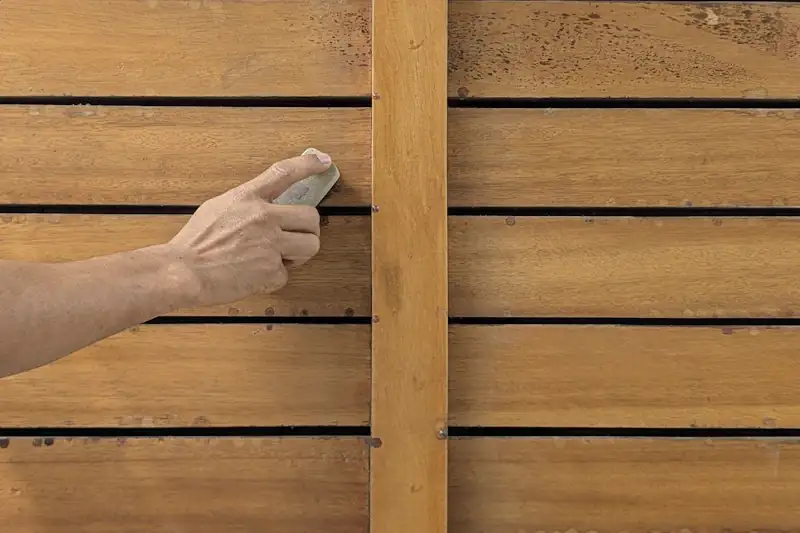
Preparation is most of the job
Stain only lasts if it soaks into clean, dry wood. We start by washing off mildew, dirt and failed finish with the right cleaner and controlled pressure, since too much pressure tears up soft wood. Loose boards are fastened and rough spots sanded. Then the deck dries fully before any product goes on.
Skipping the drying step is the most common reason stain peels in this climate.
Choosing the right finish
Clear and toner sealers show off the grain but need re-coating most often. Semi-transparent stains add color and stronger sun protection while still letting grain show, and they are the best fit for most Houston cedar and pine decks. Solid stains hide weathered wood and give the most UV protection, at the cost of covering the grain.
We use penetrating oil- or water-based products rather than film-forming coatings that can peel in humidity.
How often to re-seal
Plan on every one to three years. Horizontal boards in full sun need attention sooner than shaded rails. A quick test: sprinkle water on the boards. If it soaks in instead of beading, it is time. If boards are already soft, ask about deck repair before staining.
What is included
- Mildew and dirt removal with wood-safe cleaners
- Controlled pressure washing that does not scar the wood
- Sanding of rough and splintered areas
- Minor board and fastener repairs before staining
- Semi-transparent, solid and clear finish options
- Railings, stairs and pergolas finished to match