
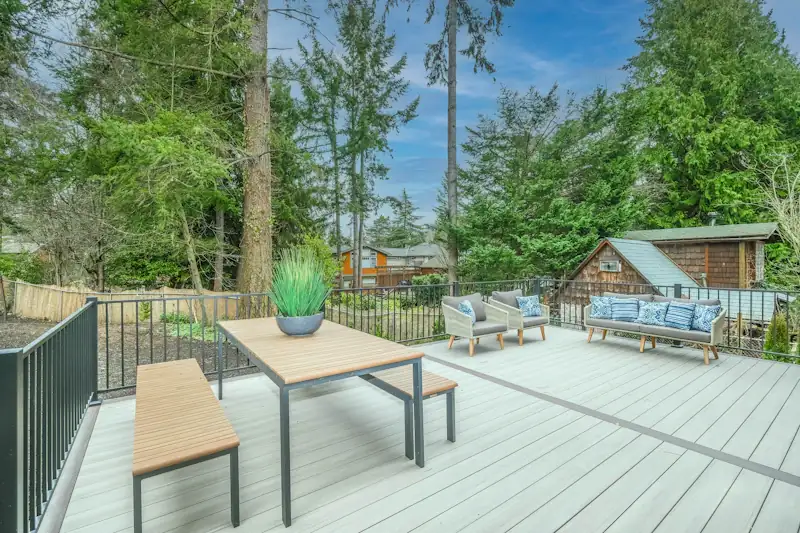
Why composite suits the Gulf Coast
Houston is hard on wood: long humid summers, heavy rain, strong sun and active termites. Capped composite does not rot, does not feed termites and never needs to be sanded or stained. An occasional wash with soap and water is the whole maintenance plan.
The trade-off is heat and price. Darker composite boards get hot in direct afternoon sun, so on a west-facing deck we steer people toward lighter colors, PVC boards, or adding shade. Composite also costs more up front than wood, though the gap narrows once you count years of stain and labor.
Installed the way the manufacturer requires
Composite moves with temperature, so board gapping, joist spacing and fastener choice all matter. We frame at the spacing the board maker specifies, use hidden fasteners for a clean surface, and picture-frame the edges so no cut ends are left showing.
Following those instructions is also what keeps the manufacturer's product warranty valid, which is one reason composite is not a good do-it-yourself shortcut.
Composite or wood?
If you plan to stay in the house for many years and dislike upkeep, composite usually wins. If you want the lowest starting price or love the look of real grain, a wood deck is still a great option. Our Houston deck cost guide compares the two side by side.
What is included
- Capped composite and PVC board options
- Hidden fasteners and picture-frame borders
- Framing spaced to the manufacturer's specification
- Matching composite or aluminum railing systems
- Lighter, cooler colors recommended for full-sun decks
- Old deck boards removed and hauled away on re-decks